Smart Wardrobe Care: Wash, Store, and Keep Clothes Looking New
Extend the life of your clothes with smarter washing, space-savvy storage, and easy upkeep tips that prevent damage, preserve fit, and keep fabrics looking new.
Mindset and Fabric Know-How
Treat wardrobe care as a system that protects both style and investment. Begin by reading care labels and learning the basics of fiber and weave. Natural fibers like cotton, linen, wool, and silk behave differently from synthetics and blends, so water temperature, agitation, and drying need to be tailored. Note colorfastness, potential shrinkage, and any special finishes that influence how a garment reacts to moisture and heat. Create a plan for laundering frequency to avoid over-washing: many items benefit from airing, brushing, or spot-cleaning instead of a full wash. Establish a simple tracking habit, such as grouping worn-once items in a separate section, so you know what needs attention. The goal is a long garment life cycle, consistent fit, and a polished appearance. This mindful approach reduces wear, conserves resources, and keeps favorites looking fresh. With a little knowledge and consistent habits, you can prevent common issues before they start and maintain reliable, confident style.
Sorting and Pre-Treating Like a Pro
Smart sorting makes washing gentler and results sharper. Separate by color (lights, darks, brights) and by fabric weight, keeping heavy denim away from delicate silks to reduce abrasion. Turn garments inside out to protect surfaces, close zippers, fasten hooks, and empty pockets to avoid snags and dye transfer. Pre-treat stains promptly: flush with cold water, then use an enzyme treatment for protein stains, a solvent-based approach for oils, and an oxygen-based booster for dingy whites. Always blot, never rub, and test for colorfastness on an inconspicuous area. For deodorant buildup, a gentle paste or targeted pretreatment softens residue before washing. Mud benefits from being dried and gently brushed away; wine or coffee respond to quick soaking with a mild solution. Keep a small caddy of tools—soft brush, stain stick, dropper, and microfiber cloth—near the hamper. Thoughtful prep reduces wash time, prevents permanent marks, and preserves texture, drape, and color.
Smart Washing for Lasting Color and Shape
Match water temperature and wash cycle to the fabric, not convenience. Use cold water for darks and delicates to reduce fading and shrinkage, warm for everyday blends, and reserve hot for linens or heavily soiled sturdy items when appropriate. Choose pH-neutral detergent for wool and silk, and consider enzyme-rich formulas for activewear or stains. Measure detergent carefully; overdosing leaves residue that dulls fibers and traps odors. Keep load size moderate so garments can move freely, and use mesh bags for lingerie, knits, and embellished pieces. Select delicate or permanent press cycles for low agitation and reduced creasing. Skip fabric softener on performance fabrics to protect wicking properties; opt for dryer balls or a brief air-dry to control static. If you have hard water, a softening booster helps detergents work efficiently and reduces graying. Avoid excessive vinegar use, as acids can weaken elastics and dull dyes over time. The right settings deliver clean results with minimal stress on fibers.
Drying, De-Wrinkling, and Finishing Touches
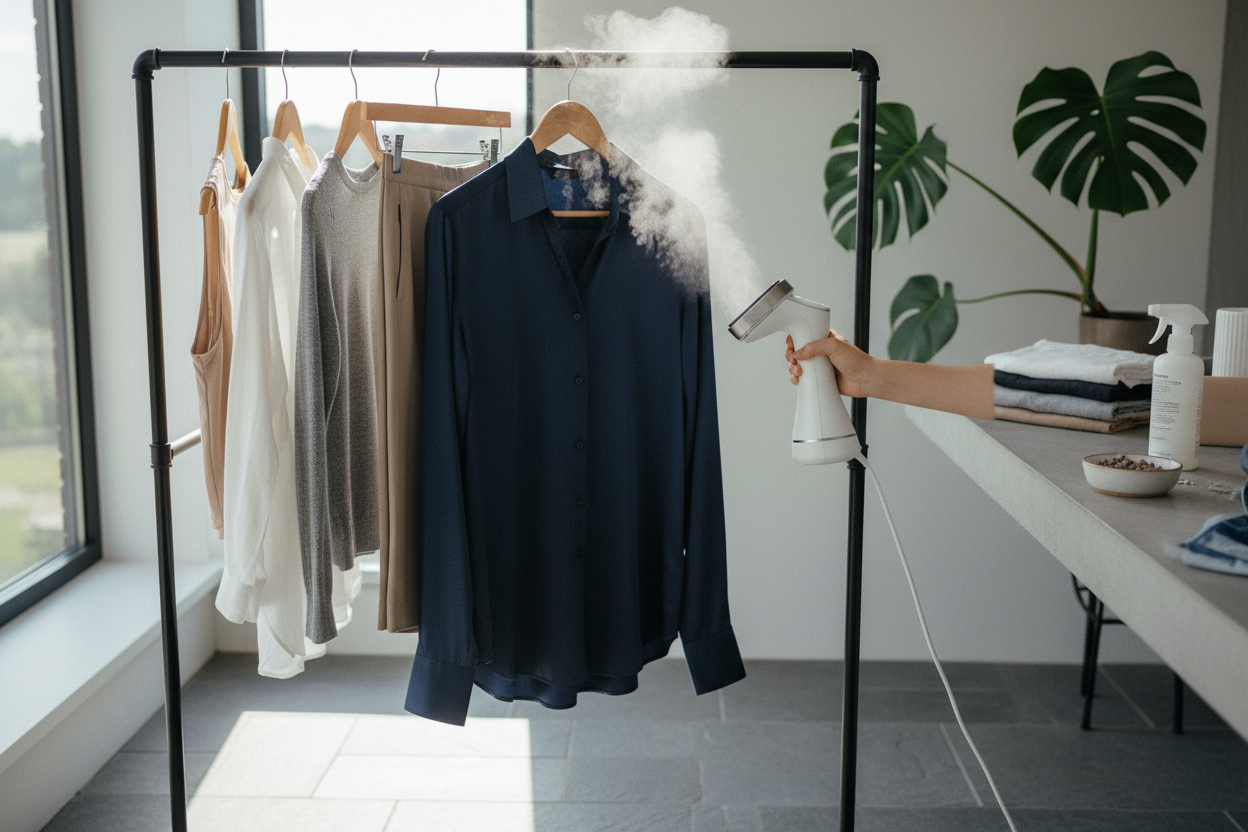
Drying is where clothes often lose their shape, so handle with care. Air-dry whenever possible to minimize heat damage: lay knits flat on a towel, reshape seams and hems, and roll to press out moisture before laying flat to finish. Hang woven shirts on wide-shoulder hangers to preserve the drape, and clip skirts at the waistband to avoid impressions. If you use a dryer, choose low heat, remove garments slightly damp, and smooth seams immediately. For wrinkles, a steamer relaxes fibers without crushing texture, while an iron with a pressing cloth prevents shine on delicate surfaces. Use steam for wool, low heat for synthetics, and gentle passes for silk. Dry dark items inside out away from direct sunlight to prevent fading. Avoid over-drying, which causes static, stiffness, and premature wear. Finish with a quick fabric brush to lift lint and freshen the surface. These small steps keep clothes crisp, soft, and ready to wear.
Storage That Preserves Shape and Freshness
Thoughtful storage maintains structure and wards off pests. Fold knits, heavy sweaters, and embellished pieces to avoid stretching, and hang blazers, coats, and dresses on contoured wood hangers to support shoulders. Give garments breathing room to reduce creasing and abrasion. Use drawer dividers for tees and intimates, and opt for breathable garment bags for special-occasion wear rather than plastic, which traps moisture. Keep closets cool, dry, and dark to protect fibers from humidity and light. Clean items before long-term storage; body oils attract moths. Natural deterrents like cedar or lavender help, and a small silica gel pack manages moisture. Rotate folded stacks to prevent permanent fold lines and re-crease trousers along original press lines. Store shoes with shapers or tissue to retain form, and keep accessories in soft pouches to prevent scratches. Regular tidying ensures you can see what you own, wear it more often, and keep everything in rotation.
Fabric-Specific Strategies That Make a Difference
Tailor care to material. Denim benefits from less frequent washing; turn inside out, wash cold, and smooth seams to reduce streaking. Wool and cashmere prefer pH-neutral wash, gentle squeeze (never wring), and flat drying; finish with a light de-pilling using a comb. Silk appreciates cool water, minimal agitation, and drying away from heat and sun; use a pressing cloth if ironing. Linen loves steam; embrace natural rumples or press while slightly damp for sharp lines. Cotton is durable but can shrink—watch temperature and over-drying. Performance fabrics need cold water and no softeners to keep moisture-wicking intact. Synthetics are heat-sensitive; choose low dryer settings or air-dry to prevent glossiness. Protect embellishments with mesh bags or spot cleaning. For leather or suede, use a soft brush and prompt spot care; allow to air out after wear. Outerwear with water-repellent finishes stays effective longer when cleaned gently and reconditioned as needed.
Maintenance Rituals for Long-Term Longevity
Build small routines that prevent big problems. After wear, give garments a quick brush, check for lint, and air them before storing. Mend early: reinforce buttons, tighten loose hems, and address tiny snags to stop runs. Keep a basic kit with needles, thread, spare buttons, fabric tape, and a compact stain stick. Schedule de-pilling sessions for sweaters and invest in a lint remover for dark pieces. Refresh between washes with a light steam to release odors and reshape fibers. During seasonal switches, inspect items, clean thoroughly, and store in breathable containers; label bins for easy retrieval. Practice rotation so the same favorites are not overworked. When traveling, use packing cubes or tissue to reduce creases, and hang items on arrival to let folds relax. Finally, adopt sustainable habits: wash less, opt for cold cycles, air-dry when possible, and donate or tailor pieces to extend their life. Consistency is the secret to clothes that look new longer.