Signals, Noise, and Patterns: A Practical Guide to Trend Analysis
Learn to separate signal from noise, spot reliable patterns, and forecast with confidence using practical frameworks, metrics, and real-world examples.
Seeing the Signal — Trend analysis begins with distinguishing signal from noise. Signals are the meaningful movements that reflect underlying forces; noise is the random fluctuation that distracts and misleads. The key is context: a spike might be a meaningful inflection or an ordinary wobble depending on baseline behavior and variability. Ask what the series represents, how it's measured, and what processes generate change. Look for consistent directionality, not isolated jumps. Compare short-term turbulence with long-term trajectory to avoid overreacting to blips. Use reference periods to anchor expectations, and quantify typical volatility so you can tell when deviations are unusual. Calibrate your eye with summary statistics and simple charts, then graduate to more formal techniques. Ultimately, trend analysis is less about predicting the exact next step and more about understanding the pattern shaping the path forward, so decisions align with where things are heading rather than where they happened to be in the last noisy moment.
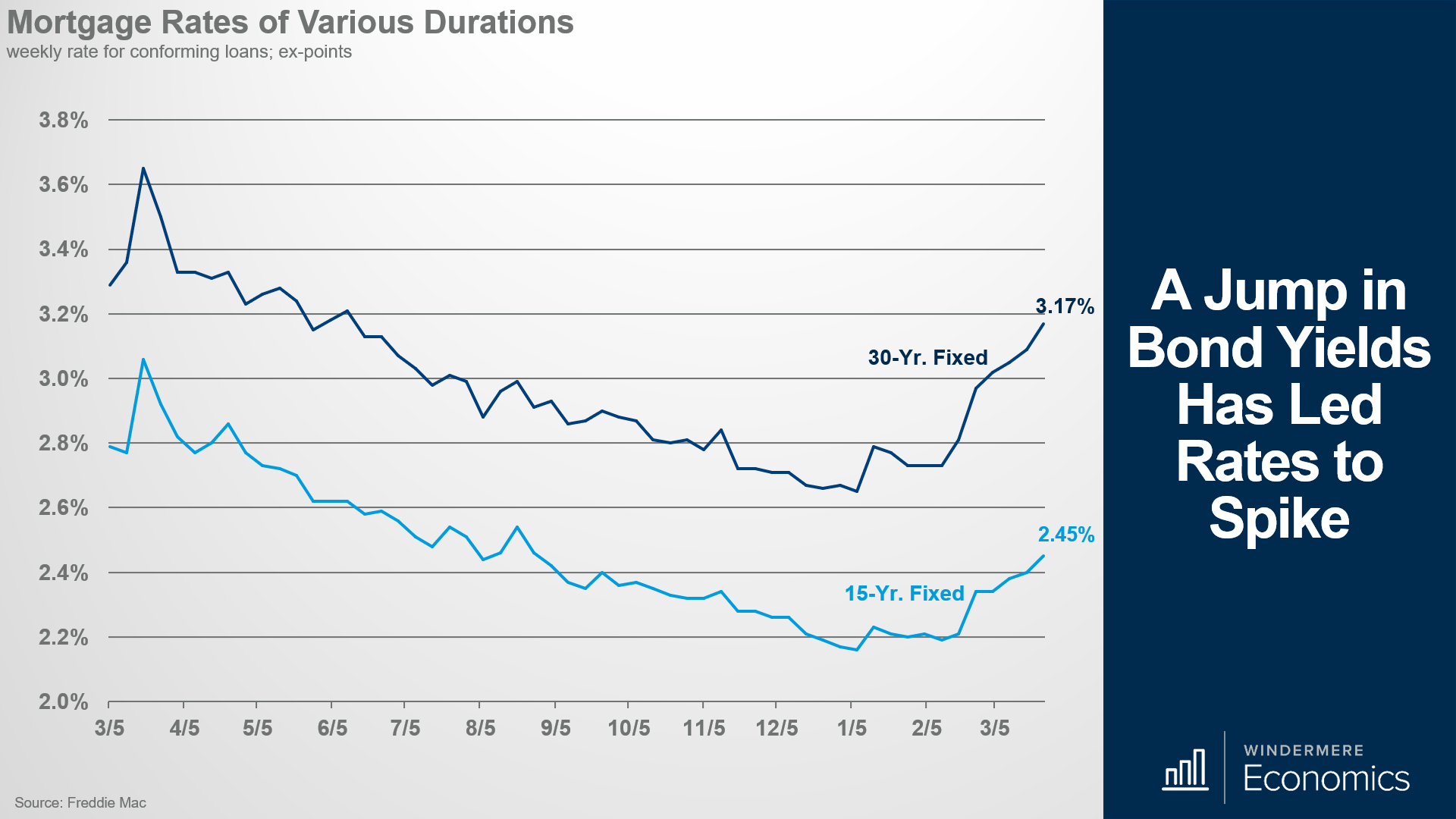
Framing the Question and Horizon — Clear analysis starts with a precise objective and a defined time horizon. Decide what you want to know: Are you estimating momentum, spotting a reversal, or confirming stability? Clarify the metric, its units, and how frequently it's observed. Granularity matters: hourly data reveals micro-dynamics, while monthly data emphasizes macro direction. Choose your window length to match the pace of change you care about; short windows respond quickly but amplify variance, long windows smooth noise but can hide emerging moves. Align comparisons with consistent baselines, such as rolling periods or matched cohorts, to reduce bias. When multiple stakeholders are involved, agree on decision thresholds and definitions up front to avoid retrospective cherry-picking. Document assumptions, including how seasonality, promotions, or external shocks might affect interpretation. With a tight scope, the rest of your toolkit—filters, indicators, and models—becomes sharper, and the resulting insights are more actionable and less ambiguous.
Cleaning and Smoothing — Before measuring patterns, refine the data so noise doesn't dominate. Start by identifying outliers using robust statistics like median and interquartile ranges; decide whether to keep, cap, or explain them based on domain knowledge. Address missing values with principled imputation—forward fill for stable series, interpolation for gradual change—while documenting uncertainty. Normalize units and align time stamps to avoid mis-synchronization. For de-noising, apply moving averages, exponential smoothing, or median filters to reveal underlying structure without erasing important turns. Use caution: over-smoothing can mask inflections, under-smoothing can create false alarms. If your sampling is irregular, consider resampling to a consistent cadence to improve comparability. Track data lineage so analyses remain reproducible. Most importantly, evaluate the effect of each cleaning step by comparing pre- and post-processed views; the goal is not cosmetic polish but a faithful signal that preserves informative variance while muting randomness.
Pattern Discovery and Structure — Real-world series often contain seasonality, cycles, and structural breaks. Start with visual exploration: rolling summaries, lag plots, and distribution profiles can reveal periodicity or drift. Use decomposition to separate trend, seasonal components, and residuals, clarifying where movement originates. Examine autocorrelation to gauge memory: strong lags suggest persistence that can be leveraged for forecasting or risk control. Segment by cohorts, geographies, or product lines to uncover heterogeneous patterns that aggregate views may hide. Watch for regime shifts, where relationships change after significant events; rolling windows and change-point detection can flag these transitions early. Explore interactions between series using lagged correlations to see which signals lead or lag others. Keep a notebook of candidate explanations and test them against the data rather than fitting elaborate narratives. The outcome is a map of patterns—what repeats, what drifts, and what snaps—that informs smarter monitoring and more resilient strategy.
Indicators and Causality — Indicators translate raw behavior into interpretable signals. Distinguish leading indicators (which move ahead of the main series), coincident metrics, and lagging measures that confirm what already happened. Combine indicators judiciously to reduce false positives; ensemble perspectives often outperform single metrics. Beware of spurious correlation: two lines moving together doesn't imply causation. Control for confounders, check stability across subgroups, and confirm that timing makes sense—causes should precede effects. Form explicit hypotheses and specify what evidence would support or refute them. When feasible, run controlled tests or exploit natural experiments to strengthen causal claims. Even without experiments, you can use counterfactual thinking: ask what would likely have happened absent the candidate driver. Treat indicators as decision aids rather than oracles, and revisit their performance regularly. Good indicators are interpretable, robust to small perturbations, and aligned with the economic or behavioral mechanism you believe is at work.
Validation and Robustness — Reliable trend analysis requires validation. Split history into development and evaluation periods to avoid optimistic bias. Use walk-forward or rolling validation so your methods face fresh data, mirroring real-time conditions. Compare against simple baselines—like a naive persistence or mean model—to ensure complexity earns its keep. Conduct sensitivity analysis by varying parameters, windows, and input subsets; stable conclusions across reasonable settings inspire confidence. Monitor error distributions, not just averages, to understand tail risks and asymmetry. Guard against overfitting by preferring parsimonious choices and penalizing unnecessary complexity. Account for multiple comparisons when testing many indicators to limit false discoveries. Document what breaks your conclusions and create contingency plans. The aim is not perfection but robustness: conclusions that hold under noise, minor data glitches, or moderate regime shifts. With disciplined validation, your signals remain trustworthy when it matters most—out of sample.
From Insight to Action — A trend becomes valuable when it guides decisions. Translate findings into clear narratives, visuals, and thresholds tied to concrete actions: accelerate, pause, pivot, or investigate. Establish alerting rules that balance timeliness with reliability, and define cooldowns to prevent churn from whipsaw reactions. Pair quantitative indicators with qualitative context from domain experts to avoid mechanical responses. Build feedback loops: after each action, track outcomes against expectations to refine models and rules. Communicate uncertainty honestly using ranges and confidence cues so stakeholders understand risk. Encode decision logic into playbooks and dashboards, and revisit them regularly as patterns evolve or goals change. Align incentives so teams favor learning over blame when trends surprise. Finally, ensure governance around data quality and ethical considerations. Execution turns analysis into impact; a disciplined, iterative approach ensures your pattern recognition compounds into durable advantage over time.