Posture Fixes for Desk Workers
Beat desk slump with simple posture fixes: ergonomic setup, micro-breaks, mobility drills, core and back strength, and habits that keep you moving.
Why Posture Matters at Your Desk
A healthy desk routine starts with understanding how posture shapes your daily wellbeing. When you sit for long stretches, your body adapts to the positions you hold most. A neutral spine—ears over shoulders, ribs over pelvis, and a gentle curve in the lower back—helps distribute load evenly across joints and tissues. Good alignment reduces tension in the neck, shoulders, and hips, supporting smoother breathing and better focus. Poor positioning, in contrast, can lead to compensations like a forward head, rounded shoulders, and a tucked pelvis, which strain the muscles, discs, and ligaments that stabilize you. Small improvements add up: lowering unnecessary tension can elevate energy, reduce headaches, and help you feel more resilient at work. The goal is not to sit perfectly still but to build an adaptable posture that feels balanced, efficient, and pain-free. Think less about a rigid pose and more about easy alignment that you can return to repeatedly throughout the day.
Set Up Your Workspace for Success
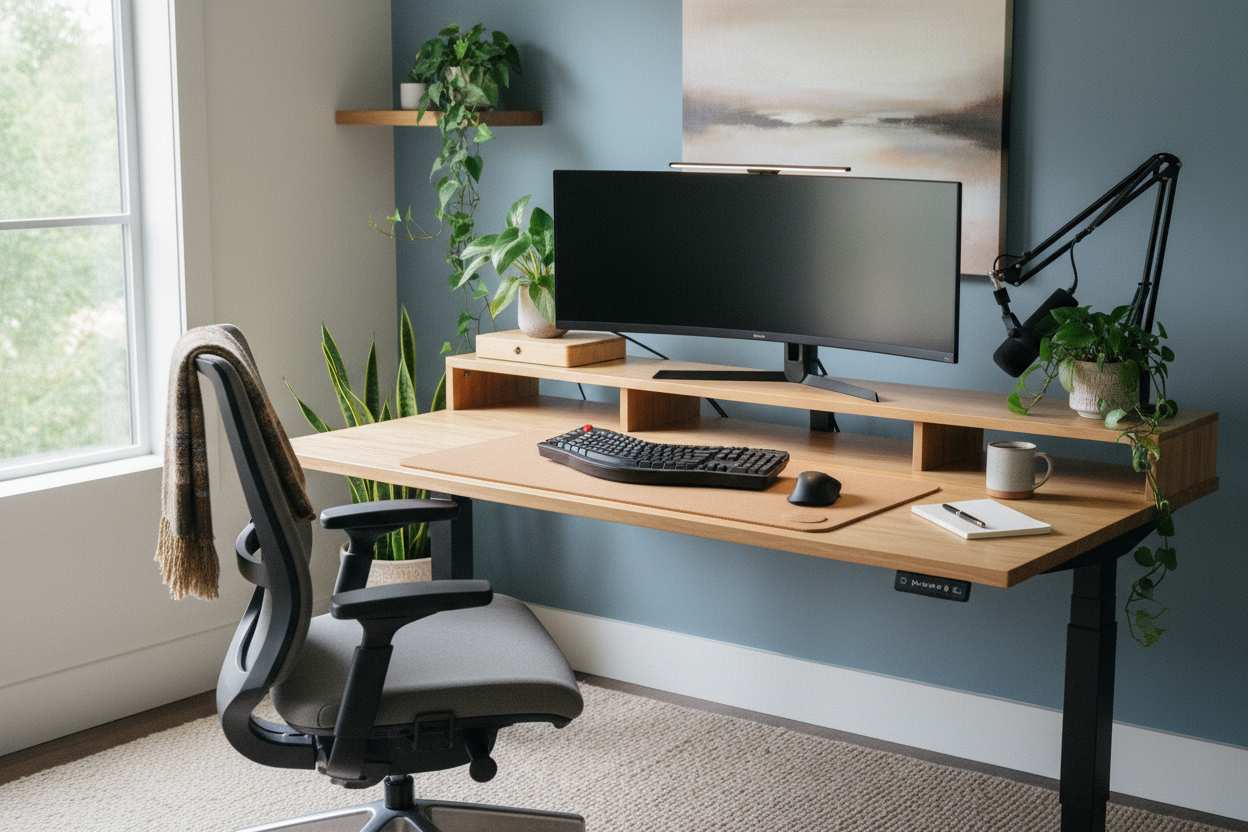
Your environment should make healthy posture the default. Start with chair height: aim for feet flat and knees roughly level with hips, so your pelvis stays neutral on your sit bones. Support your lower back with a small lumbar cushion or an adjustable chair, and let the backrest carry some of the load. Place the monitor so the top of the screen is near eye level and an arm's length away to reduce neck strain and squinting. Keep the keyboard and mouse close with elbows at your sides, forearms roughly parallel to the floor, and wrists in a neutral line. Armrests, if used, should lift the elbows lightly without shrugging the shoulders. Organize frequently used items within easy reach to minimize twisting. If you use a standing desk, alternate positions through the day and consider a footrest to shift weight. Aim for a setup that prioritizes comfort, alignment, and variability.
Sit Smart: Cues You Can Feel
Great sitting is a stack of simple sensations you can revisit anytime. Set your pelvis first: feel your sit bones grounded, neither tucked under nor exaggeratedly arched. Grow tall through the crown of your head, keeping a soft, long neck, and gently tuck the chin to avoid forward head drift. Let the ribcage float above the pelvis without flaring; imagine breathing into the sides and back of the ribs for 360-degree breathing that stabilizes the core. Soften the shoulders down and slightly back, as if widening the collarbones, and keep elbows close to the body so the forearms glide easily over the desk. Use the backrest for support, not slouching, by lightly contacting the lumbar area and mid-back. Plant your feet firmly, and allow tiny fidgets through the ankles and hips to keep blood flowing. These cues make neutral alignment feel effortless, turning posture into a dynamic, comfortable position rather than a rigid command to sit still.
Move Often: Breaks That Protect Your Back
Your body thrives on movement variety. Even the best chair and alignment benefit from regular microbreaks that circulate blood, feed joints, and refresh attention. Set gentle reminders for short resets: stand up, open the chest, look far into the distance, and take a few slow diaphragmatic breaths. Sprinkle in easy movements throughout the day—shoulder rolls, neck nods, ankle pumps, and gentle spinal extension over the top of your chair. Walk to refill water, change tasks while standing, or pace during calls to create a rhythm of light activity. If a break feels inconvenient, try a thirty-second stretch at your desk, then extend it when time allows. Think of these moments as maintenance, not interruptions; frequent, small bursts protect your back more effectively than a single long session. Over time, consistent movement reduces stiffness, sharpens concentration, and makes good posture feel natural instead of forced.
Mobility Fixes: Stretches That Target Desk Strain
Targeted mobility keeps common desk hotspots from tightening. For the neck, practice gentle chin glides and side bends, moving slowly and breathing steadily. Open the chest with a doorway pec stretch or a clasped-hands reach behind you, letting the ribs stay calm and stacked. For the upper back, try thoracic rotations and extensions over the chair back or a foam roller substitute like a rolled towel. Unwind hip tightness with a hip flexor stretch by kneeling or staggered standing, keeping the ribs stacked over the pelvis, and add glute openers like figure-four or seated ankle-to-knee. Lengthen the hamstrings with a supported hinge rather than a rounded spine, and ease wrist tension by alternating gentle flexion and extension stretches, plus forearm massage. Finish with a few slow, deep breaths to downshift nervous system tension. These moves restore range of motion, making sitting positions easier to maintain and reducing the urge to slouch.
Strengthen What Sits All Day
Strong, balanced muscles make posture resilient. Prioritize rear-side support: train the upper back with rows, band pull-aparts, and Y-T-W raises to counter rounded shoulders. Build glute and hamstring strength with hip hinges, bridges, split squats, and step-ups to stabilize hips and protect the lower back. For the core, focus on anti-movement work—dead bugs, bird dogs, and side planks—to resist unwanted extension or rotation while you sit and lift. Light carries challenge alignment while walking, teaching the body to stay tall under load. Move with slow, controlled reps, feel full ranges, and increase difficulty gradually to avoid strain. A few purposeful sets sprinkled through the week can transform how your body handles desk demands. Strong muscles buffer stress, hold neutral alignment with less effort, and reduce end-of-day aches. Consistency matters more than intensity; choose a routine you can repeat and build over time.
Make Posture a Habit, Not a Chore
The best posture plan is the one you actually practice. Anchor healthy habits to routines you already do: reset your alignment after sending messages, breathe deeply while waiting for a file to load, or stand during short calls. Place environmental cues like a water bottle, a sticky note with a simple posture word, or a lacrosse ball for quick mobility. Use phone or calendar reminders for movement snacks, but stay flexible—skip or shorten when needed and resume without guilt. Track a few simple wins: how often you took breaks, the stretches you did, or how your neck felt by day's end. Celebrate small progress; feeling more comfortable at your desk is meaningful health improvement. At home, support recovery with gentle evening mobility, light walks, and sleep habits that let tissues repair. Over time, you will develop a reliable rhythm of alignment, movement, and strength that protects your body while you work.